Swiss Food Quality Standards
Kerala Heritage. Authentic Kerala Products. SwissQuality Benchmarking.
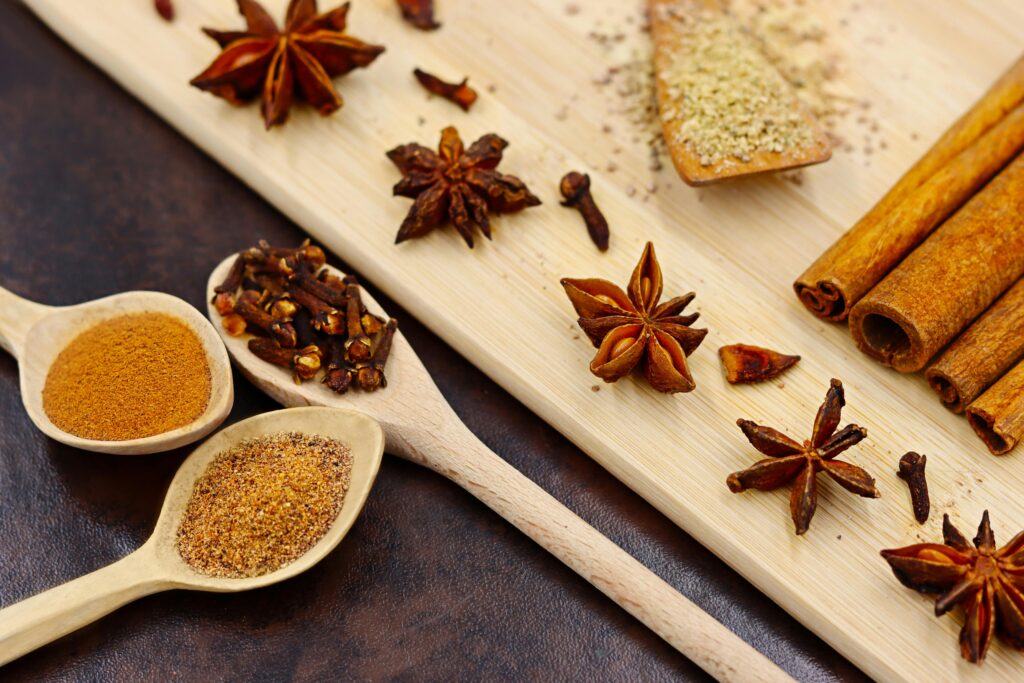
Swiss Food Quality Standards for Spices
Switzerland maintains some of the most stringent food safety and labeling regulations in
Europe. For spice importers and suppliers, compliance is not optional — it is foundational.
Keralam operates under Jaim Enterprises GmbH, a Swiss-registered company structured to align Kerala-origin spice sourcing with Swiss food quality expectations. This page explains how Swiss food regulations apply to spices and how compliance strengthens trust for retailers, distributors, and consumers across Switzerland.
Kerala Cuisine vs Generic “Indian Food” in Switzerland
Many Swiss consumers experience Indian cuisine primarily through restaurant-style curries. However, Kerala cuisine differs in key ways:
Traceability
● Supplier documentation
● Import batch identification
● Processing records
● Distribution tracking
Labeling Standards
● Product name
● Country of origin
● Net weight
● Allergen declaration
● Nutritional information
Import Documentation
● Microbiological risk
● Moisture control
● Cross-contamination prevention
● Storage conditions
● Processing temperature management
Who Benefits from Compliance-Driven
Sourcing?
Compliance benefits every stakeholder in the supply chain.
Retailers
Reduced regulatory risk and improved shelf credibility.
Distributors
Clear documentation and structured onboarding.
Restaurants
Consistent quality and traceable
supply
Consumers
Transparent labeling and product
integrity.
What Defines Kerala Cuisine?
Kerala’s culinary identity is shaped by geography, climate, and centuries of spice trade.
1. Coastal Influence
Located along India’s southwestern coast, Kerala integrates:
- Fresh fish and seafood
- Tamarind-based souring agents
- Coconut milk gravies
2. Tropical Agriculture
Kerala produces:
- Black pepper
- Turmeric
- Cardamom
- Cloves
- Cinnamon
- Curry leaves
- Coconut
These ingredients form the backbone of authentic Kerala dishes.
3. Rice as a Daily Staple
Unlike wheat-heavy North Indian cuisine, Kerala meals revolve around:
- Palakkadan Matta Rice
- Jeeraka Sala Rice
- Idli Rice
Rice is not a side dish — it is
central to the meal structure.
The Role of Spices in Kerala Cooking
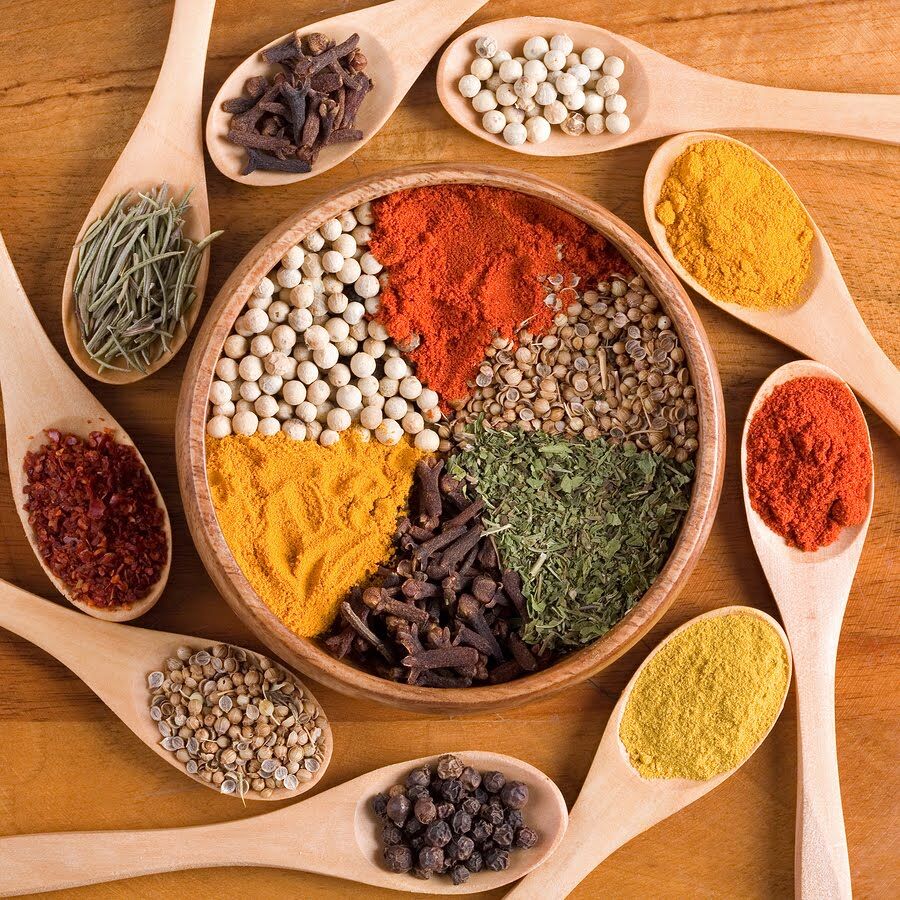
In Kerala cuisine, spices are not used for heat alone. They create aromatic architecture. Core Spices Used in Kerala Dishes
-
Malabar Black Pepper – Provides depth and warmth
-
Turmeric – Adds colour and foundational earthiness
-
Coriander – Builds body in gravies
-
Cumin – Adds warmth and digestive balance
-
Fenugreek – Subtle bitterness in fish curries
-
Cardamom – Sweet aromatic lift in desserts
-
Cloves & Cinnamon – Structure in meat dishes
Spice tempering (known as tadka) is often performed in coconut oil, enhancing aroma
release. For Swiss kitchens, understanding this layering technique transforms cooking outcomes.
Signature Kerala Dishes Explained
Authenticity is not marketing language. It is structural.True Kerala-origin spices involve:
Onam Sadya – The Grand Vegetarian Feast
Spices grown specifically in Kerala’s agricultural zones, not multi-state blended sourcing.
Controlled Harvesting Practices
Traditional harvesting cycles are followed to preserve natural oil content,
aroma, and overall spice quality.
Small-Batch Processing
Reduced industrial over-processing protects:
Essential oil retention,
Colour integrity,
Flavour complexity
Traceable Export Documentation
Each batch includes clear sourcing and traceability records, supporting Swiss import compliance and quality assurance standards.
Signature Kerala Dishes Explained
Our Kerala spice portfolio focuses on origin integrity rather than excessive SKU expansion.
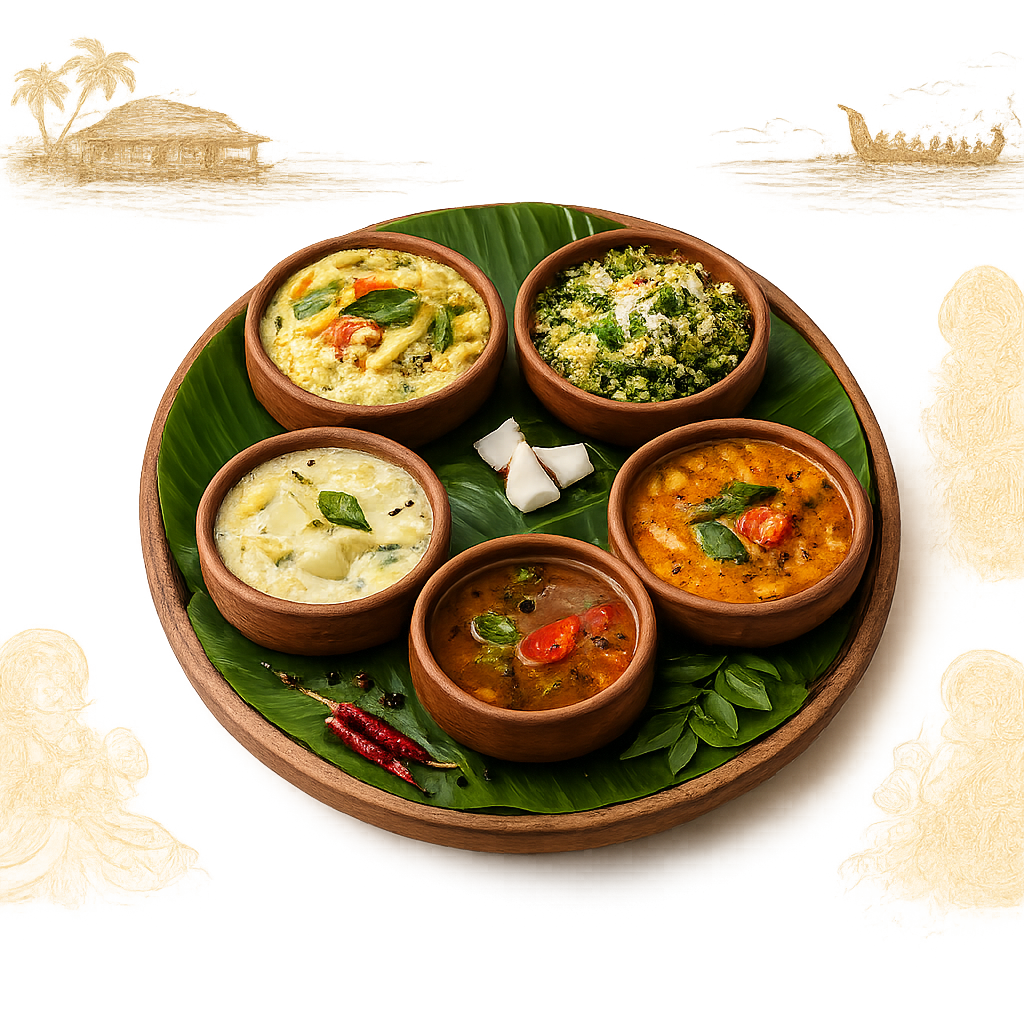
Onam Sadya – The Grand Vegetarian Feast
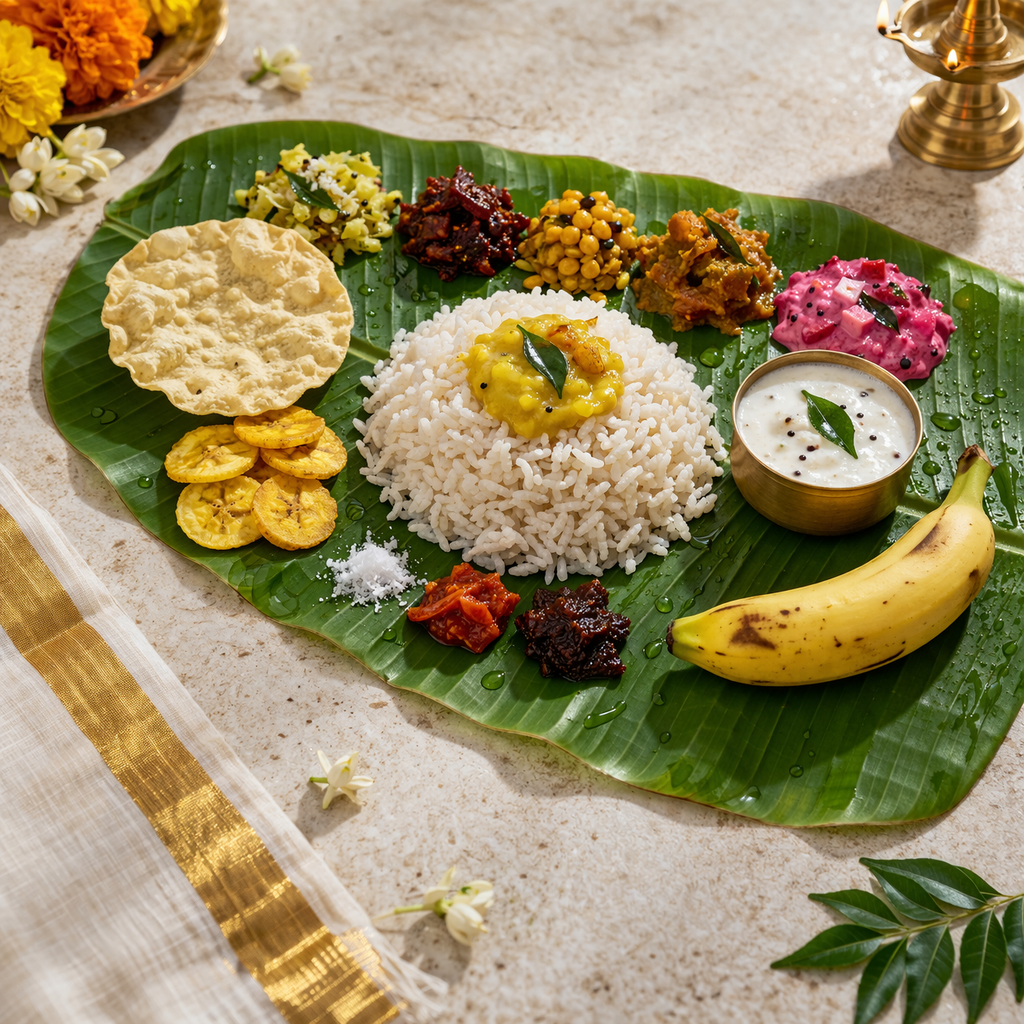
Onam Sadya is a traditional multi-course vegetarian feast served during Kerala’s harvest
festival.
-
Rice (often Matta rice)
-
Sambar
-
Rasam
-
Avial
-
Thoran
-
Pickles
-
Papadam
-
Multiple Payasam desserts
Sadya reflects Kerala’s agricultural abundance and structured meal philosophy.
In Switzerland, preparing Sadya introduces households to:
● Authentic Kerala Rice
● Sambar Powder
● Rasam Powder
● Payasam Mix
Traditional Kerala Breakfast
-
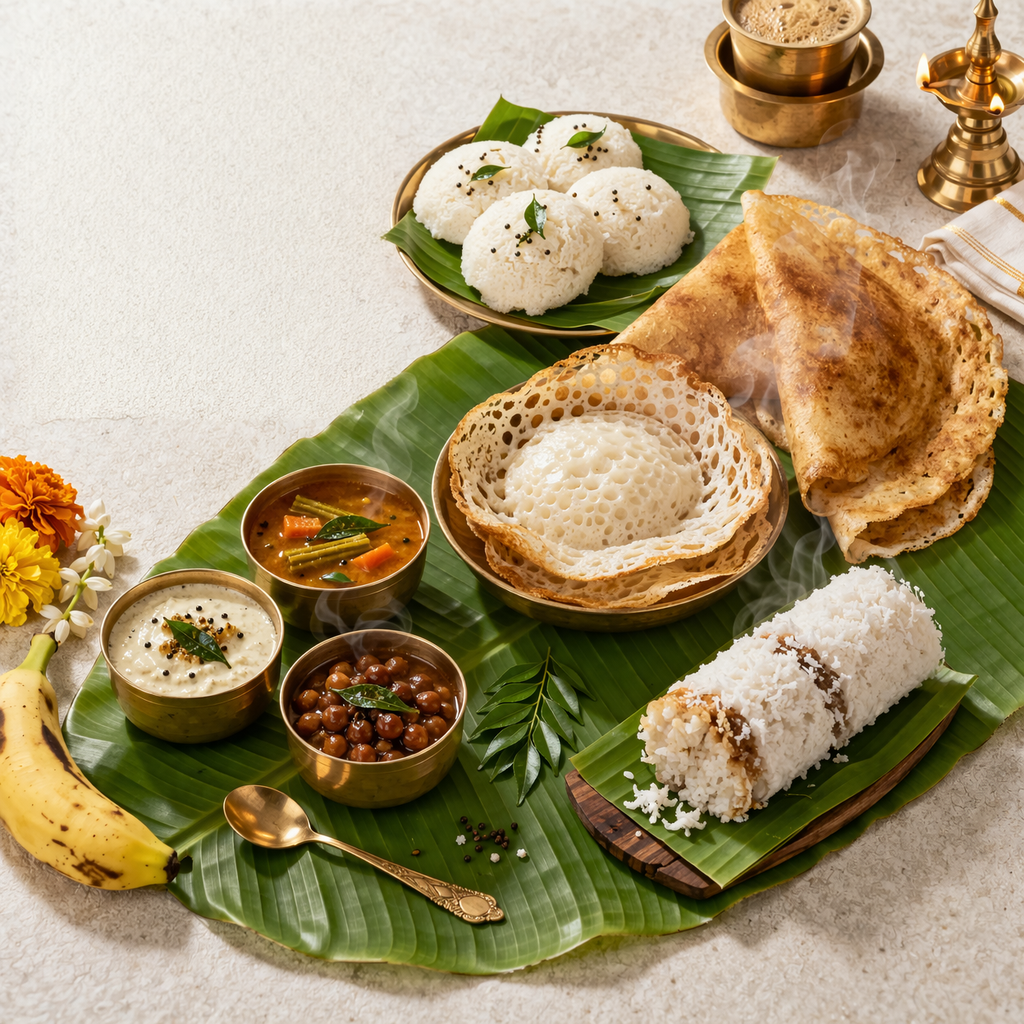
Breakfast in Kerala differs significantly from generic Indian restaurant menus.
-
Idli : Steamed fermented rice cakes.
-
Dosa : Fermented rice crepes.
-
Appam : Soft-centered, lace-edged rice pancakes
-
Puttu : Steamed rice flour layered with coconut.
These dishes are typically served with:
● Coconut chutney
● Sambar
● Kadala curry
For Swiss households, Ready Mix solutions such as Idli Mix, Dosa Mix, Appam Mix, and
Puttu Podi make traditional breakfast accessible while preserving authenticity.
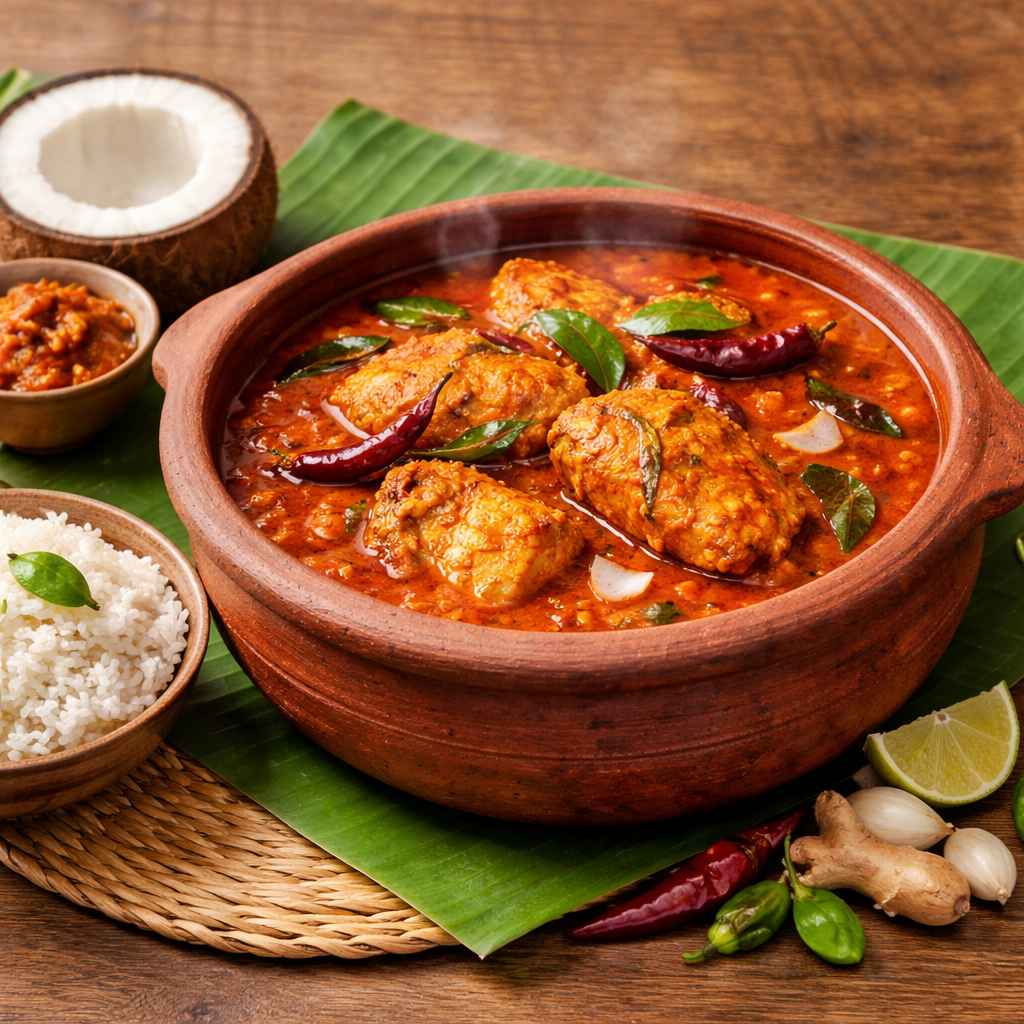
Kerala Fish Curry – Coastal Heritage
Kerala fish curry is one of the most recognized regional dishes. Distinctive elements:
-
Tamarind-based sourness (often kudampuli)
-
Coconut oil tempering
-
Curry leaves aroma
-
Balanced chilli heat
-
Turmeric-rich colour
Spices used typically include:
● Turmeric
● Chilli powder
● Coriander
● Fenugreek
● Mustard seeds
In Switzerland, this dish highlights the importance of authentic spice sourcing. Generic spice blends cannot replicate its regional character.
Vegetarian Kerala Dishes
-
Kerala cuisine features a rich vegetarian tradition influenced by temple culture and seasonal agriculture. Popular dishes include:
-
Avial – Mixed vegetables in coconut paste
-
Thoran – Stir-fried vegetables with grated coconut
-
Olan – Ash gourd in coconut milk
-
Sambar – Lentil-based vegetable stew
-
Rasam – Spiced tamarind soup
These dishes emphasize balance rather than heaviness.
For Swiss consumers seeking plant-based meal inspiration, Kerala vegetarian cooking
offers:
● Coconut-based flavor structure
● Rice-centered meal planning
● Moderate spice intensity
● Nutritionally balanced compositions
Kerala Spices in the Swiss Kitchen
-
Kerala spices adapt naturally into Swiss culinary contexts when used thoughtfully.
Black Pepper
The "King of Spices." Bold aroma, layered heat, and natural oil richness. Ideal for Swiss kitchens and traditional Indian cooking.
Turmeric Powder
High-curcumin turmeric sourced from Kerala farms. Vibrant colour, earthy flavor. Essential for curry bases and wellness cooking.
Cardamom
Premium Kerala Cardamom. Intensely aromatic and highly valued in biriyani, desserts, and payasam preparations.
Cinnamon
Warm sweetness with complex depth. Used in spice blends, desserts, and traditional Kerala gravies.
How Kerala Spices Perform in Swiss Conditions
-
Switzerland’s climate differs significantly from Kerala’s tropical environment. Proper handling and storage are essential to preserve the natural qualities of authentic spices.
Why Proper Storage Matters
● Preservation of aroma
● Stability of colour
● Maintenance of flavour intensity
● Limited traceability
Recommended Storage Practices
● Airtight containers
● Cool, dry indoor storage
● Avoid direct sunlight
● Minimize humidity exposure
Regulatory Framework for Spices
Spices are agricultural products. As such, they are subject to strict regulatory oversight regarding:
Pesticide residue levels
Import documentation
Labeling transparency
Traceability systems
Food safety controls
Allergen declarations
Compliance with these standards is essential to ensure safe, legal, and transparent trade of spices across international markets. Each requirement protects consumers and maintains the integrity of the supply chain.
FAQs
Find answers to common questions about Kerala spices, sourcing, quality, and availability in Switzerland.
Kerala spices are region-specific, cultivated in Kerala, known for their high essential oil content, aroma, and traditional farming methods.
Kerala cuisine focuses on aroma and balance rather than extreme heat. Spice layering enhances depth without overwhelming intensity.
Yes. With access to Kerala-origin spices, rice varieties, and ready mixes, traditional Kerala dishes can be prepared successfully in Swiss kitchens.
Common varieties include Palakkadan Matta Rice, Jeeraka Sala Rice, and Idli Rice, depending on the dish.
Yes. Kerala spices are region-specific, often higher in essential oil concentration, and traceable to defined cultivation zones.
Experience Authentic Kerala Cuisine in Switzerland
Whether you are:
● A Swiss household exploring regional Indian cooking
● A retailer seeking premium ethnic product categories
● A restaurant introducing Kerala dishes
● A food enthusiast seeking authentic spice integrity
Keralam provides structured access to authentic Kerala culinary ingredients in Switzerland.
Keralam Authentic Kerala spices delivered to Switzerland.
Shop
-
Spice Blends
-
Single Spices
-
Kerala Secialties
-
Payasam Mix
Quick Links
-
Terms and Conditions
-
Privacy Policy
-
Refund and Return Policy
-
Shipping Policy
Contact us
-
+919496323011
-
+41783169766
-
info@swisskeralexports.com
© 2025 Keralam. Authentic Kerala Products. Switzerland.
● Supplier documentation
● Import batch identification
● Processing records
● Distribution tracking
Labeling Standards
● Product name
● Country of origin
● Net weight
● Allergen declaration
● Nutritional information
Import Documentation
● Microbiological risk
● Moisture control
● Cross-contamination prevention
● Storage conditions
● Processing temperature management
Who Benefits from Compliance-Driven Sourcing?
Compliance benefits every stakeholder in the supply chain.
Retailers
Distributors
Restaurants
supply
Consumers
integrity.
What Defines Kerala Cuisine?
Kerala’s culinary identity is shaped by geography, climate, and centuries of spice trade.
1. Coastal Influence
Located along India’s southwestern coast, Kerala integrates:
- Fresh fish and seafood
- Tamarind-based souring agents
- Coconut milk gravies
2. Tropical Agriculture
Kerala produces:
- Black pepper
- Turmeric
- Cardamom
- Cloves
- Cinnamon
- Curry leaves
- Coconut
These ingredients form the backbone of authentic Kerala dishes.
3. Rice as a Daily Staple
Unlike wheat-heavy North Indian cuisine, Kerala meals revolve around:
- Palakkadan Matta Rice
- Jeeraka Sala Rice
- Idli Rice
Rice is not a side dish — it is central to the meal structure.
The Role of Spices in Kerala Cooking
In Kerala cuisine, spices are not used for heat alone. They create aromatic architecture. Core Spices Used in Kerala Dishes
- Malabar Black Pepper – Provides depth and warmth
- Turmeric – Adds colour and foundational earthiness
- Coriander – Builds body in gravies
- Cumin – Adds warmth and digestive balance
- Fenugreek – Subtle bitterness in fish curries
- Cardamom – Sweet aromatic lift in desserts
- Cloves & Cinnamon – Structure in meat dishes
Spice tempering (known as tadka) is often performed in coconut oil, enhancing aroma
release. For Swiss kitchens, understanding this layering technique transforms cooking outcomes.
Signature Kerala Dishes Explained
Authenticity is not marketing language. It is structural.True Kerala-origin spices involve:
Onam Sadya – The Grand Vegetarian Feast
Spices grown specifically in Kerala’s agricultural zones, not multi-state blended sourcing.
Controlled Harvesting Practices
Traditional harvesting cycles are followed to preserve natural oil content, aroma, and overall spice quality.
Small-Batch Processing
Reduced industrial over-processing protects: Essential oil retention, Colour integrity, Flavour complexity
Traceable Export Documentation
Each batch includes clear sourcing and traceability records, supporting Swiss import compliance and quality assurance standards.
Signature Kerala Dishes Explained
Our Kerala spice portfolio focuses on origin integrity rather than excessive SKU expansion.
Onam Sadya – The Grand Vegetarian Feast
Onam Sadya is a traditional multi-course vegetarian feast served during Kerala’s harvest
festival.
- Rice (often Matta rice)
- Sambar
- Rasam
- Avial
- Thoran
- Pickles
- Papadam
- Multiple Payasam desserts
Sadya reflects Kerala’s agricultural abundance and structured meal philosophy.
In Switzerland, preparing Sadya introduces households to:
● Authentic Kerala Rice
● Sambar Powder
● Rasam Powder
● Payasam Mix
Traditional Kerala Breakfast
- Breakfast in Kerala differs significantly from generic Indian restaurant menus.
- Idli : Steamed fermented rice cakes.
- Dosa : Fermented rice crepes.
- Appam : Soft-centered, lace-edged rice pancakes
- Puttu : Steamed rice flour layered with coconut.
These dishes are typically served with:
● Coconut chutney
● Sambar
● Kadala curry
For Swiss households, Ready Mix solutions such as Idli Mix, Dosa Mix, Appam Mix, and
Puttu Podi make traditional breakfast accessible while preserving authenticity.
Kerala Fish Curry – Coastal Heritage
Kerala fish curry is one of the most recognized regional dishes. Distinctive elements:
- Tamarind-based sourness (often kudampuli)
- Coconut oil tempering
- Curry leaves aroma
- Balanced chilli heat
- Turmeric-rich colour
Spices used typically include:
● Turmeric
● Chilli powder
● Coriander
● Fenugreek
● Mustard seeds
In Switzerland, this dish highlights the importance of authentic spice sourcing. Generic spice blends cannot replicate its regional character.
Vegetarian Kerala Dishes
- Kerala cuisine features a rich vegetarian tradition influenced by temple culture and seasonal agriculture. Popular dishes include:
- Avial – Mixed vegetables in coconut paste
- Thoran – Stir-fried vegetables with grated coconut
- Olan – Ash gourd in coconut milk
- Sambar – Lentil-based vegetable stew
- Rasam – Spiced tamarind soup
These dishes emphasize balance rather than heaviness.
For Swiss consumers seeking plant-based meal inspiration, Kerala vegetarian cooking
offers:
● Coconut-based flavor structure
● Rice-centered meal planning
● Moderate spice intensity
● Nutritionally balanced compositions
Kerala Spices in the Swiss Kitchen
- Kerala spices adapt naturally into Swiss culinary contexts when used thoughtfully.
Black Pepper
Turmeric Powder
Cardamom
Cinnamon
How Kerala Spices Perform in Swiss Conditions
- Switzerland’s climate differs significantly from Kerala’s tropical environment. Proper handling and storage are essential to preserve the natural qualities of authentic spices.
Why Proper Storage Matters
● Preservation of aroma
● Stability of colour
● Maintenance of flavour intensity
● Limited traceability
Recommended Storage Practices
● Airtight containers
● Cool, dry indoor storage
● Avoid direct sunlight
● Minimize humidity exposure
Regulatory Framework for Spices
Spices are agricultural products. As such, they are subject to strict regulatory oversight regarding:
Compliance with these standards is essential to ensure safe, legal, and transparent trade of spices across international markets. Each requirement protects consumers and maintains the integrity of the supply chain.
FAQs
Kerala spices are region-specific, cultivated in Kerala, known for their high essential oil content, aroma, and traditional farming methods.
Kerala cuisine focuses on aroma and balance rather than extreme heat. Spice layering enhances depth without overwhelming intensity.
Yes. With access to Kerala-origin spices, rice varieties, and ready mixes, traditional Kerala dishes can be prepared successfully in Swiss kitchens.
Common varieties include Palakkadan Matta Rice, Jeeraka Sala Rice, and Idli Rice, depending on the dish.
Yes. Kerala spices are region-specific, often higher in essential oil concentration, and traceable to defined cultivation zones.
Experience Authentic Kerala Cuisine in Switzerland
Keralam Authentic Kerala spices delivered to Switzerland.
Shop
- Spice Blends
- Single Spices
- Kerala Secialties
- Payasam Mix
Quick Links
- Terms and Conditions
- Privacy Policy
- Refund and Return Policy
- Shipping Policy
Contact us
- +919496323011
- +41783169766
- info@swisskeralexports.com
© 2025 Keralam. Authentic Kerala Products. Switzerland.